28 September 2006

Singer Mowing Machine


Read today in the "Power Plays" blog in the Village Voice about the skullduggery of developer Gregg Singer, who's been a busy little beaver lately gnawing off the ornamental work on the lovely old P.S. 64 schoolhouse in the East Village. Why he's doing it and how he's doing it are tales in chutzpah and cultural criminality that know no equal. I couldn't begin to explain the nitty gritty of it all as well as the Voice, so I'm just going to reprint the "Power Plays" item here in full. Read and wonder at the vileness of the feckless real estate capitalist mindset:

"You have to hand it to developer Gregg Singer. Last week he took out a full-page ad on the back of The Villager blaming local politicians for the looming "eyesore" of P.S. 64.

""Old P.S. 64 stands as an eyesore in your neighborhood because of inaction on the part of your representatives," begins the open letter to East Village residents signed by 9th and 10th Street LLC, the development corporation Singer formed. "Some of them have decided that the best thing for this community is to fight the owners, and keep the building vacant and deteriorating, rather than develop it to benefit the people in the community."

"No matter that it was those same representatives who lobbied to landmark the old school, while Singer is actively wrecking it.

"On the morning of September 11, no less, Singer dispatched a demolition crew to resume stripping the facade of the century-old former elementary school. (He had to take a break last month after being cited for insufficient scaffolding.)

"Now neighbors wake to the sound of his workers gnawing at the building like industrial woodpeckers. To date, the crew has managed to destroy eight of the 11 ornate dormer windows on the 10th Street side of the school.

"So it takes some chutzpa to blame others for P.S. 64's "unsightly" condition.

"That said, Singer has a point--local pols have been lame in spelling out what should or could happen with the building, given the nature of the owner they're dealing with.

"By suing the city for $100 million, Singer has thus far only succeeded in giving Bloomberg officials an excuse not to deal with him.

"Now chopping at the building has given East Village council rep Rosie Mendez an excuse not to deal with him.

"Singer has accused former City Councilwoman Margarita Lopez and now Mendez of discouraging groups from leasing space in the building--charges they both deny. Regardless, there are plenty of arts and social service groups that would go in there now, if Singer would give them a decent price.

"Singer says he can no longer "afford" to so so. Perhaps that's because he spent so much money hiring no fewer than four leading PR firms (Howard Rubenstein, hello?) and four different law firms (including Giuliani's ex-chief of staff Randy Mastro, who can't come cheap) to plead his case, even as he simultaneously managed to alienate anyone in office who might have helped him.

"All of which makes it seem like he's just been maneuvering himself into the victim's seat all along.

"According to the estimate on the permit application, the denuding of P.S. 64 alone is costing Singer $600,000.

"In the backpage ad (which features a rendering of the still intact 9th Street side of P.S. 64), Singer continues to insist that replacing the school with a 19-story dorm would be a financial windfall for the neighborhood. Never mind that there are already numerous other megadorms in the area, or that many in the Village resent the notion of their neighborhood being turned into a university plantation.

"One wonders whether the city's strategy at this point is simply to let Singer continue cutting off his nose to spite his face, with the hope that his facade demolition campaign will succeed only in depreciating the value of his property.

"The facade work permit—approved before the building was landmarked—expires on October 25. Unless he hires an even bigger crew, it seems unlikely that Singer will finish stripping off all the terra cotta and limestone detail from the building, which he says he needs to do in order to challenge the building's landmark designation in court.

"And City Hall is pushing forward a comprehensive rezoning plan for the East Village that would likely nix Singer's high-rise dorm anyway.

"Meanwhile, over the past month, Mendez and staff from the area's other elected representatives have been meeting with community activists to brainstorm a “realistic, market-driven plan” for restoring the old school as a community facility.

"They've asked development consultants to help come up with an alternative that is both economically viable yet still provides some measure of the social and arts programming that was lost with the eviction of CHARAS/El Bohio, the Latino community center that occupied the old school for 20 years before Singer purchased it.

"Part of that effort, says one insider, involves putting a "realistic price tag" on the building—rather than the inflated $51 million to $87 million figure Singer has been floating (recall that he bought it for a mere $3.15 million back in 1998)—as well as a "realistic assessment" of what it would take to renovate and sustain the place.

"So it's wrong to say that Mendez and the other reps are sitting on their hands. One just questions why they didn't get this real before the building was landmarked, let alone before Singer started jackhammering."

A Tale of Two Pizzas


Midwood and East Harlem.

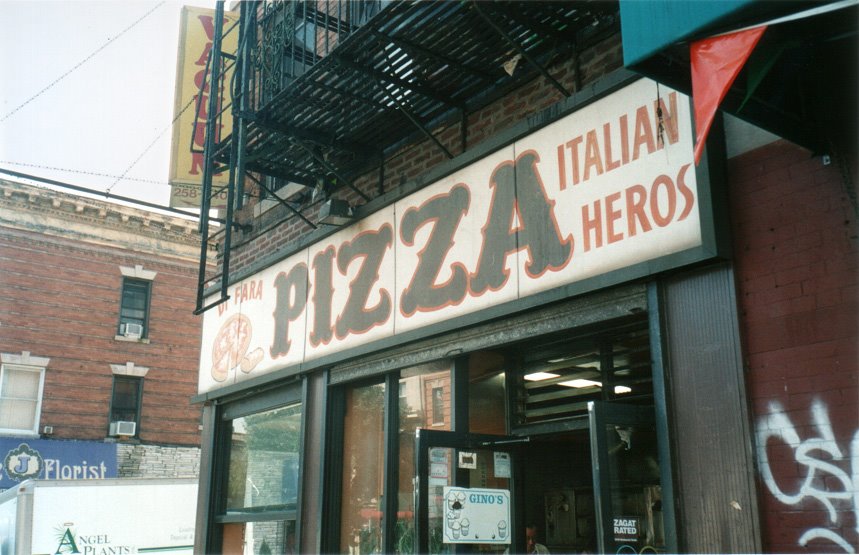
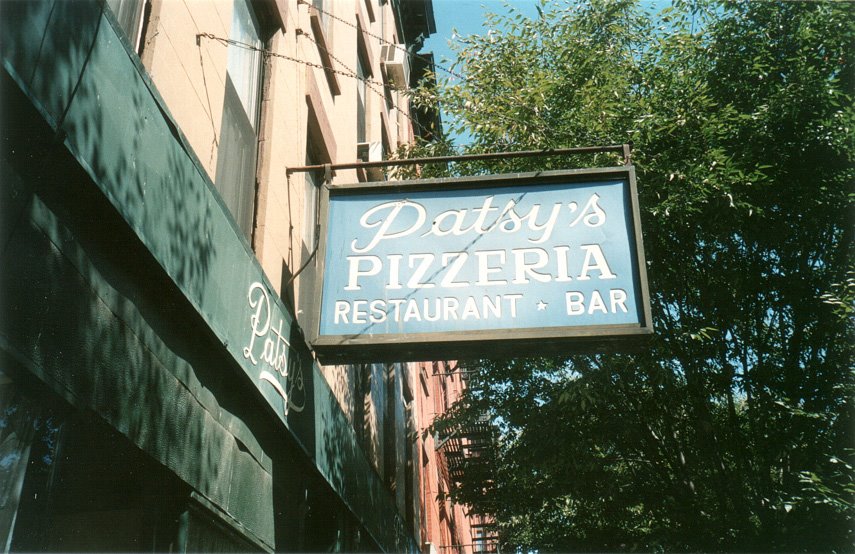
Unless you live there or have a very specific errand to run, they're not neighborhoods you regularly make a beeline for. Well, I had a specific errand the other weekend, and that errand was called: pizza consumption. East Harlem is the home of Patsy's, one of the old masters in the New York Pizza Hall of Fame. Midwood is where you'll find DiFara's, a corner pizzeria many call the best in the city.

I had recently made a pilgrimage to Grimaldi's (an offshoot of Patsy's), and—having already patronized Totonno's, John's and Lombardi's—decided it was time to knock a couple more classic pie palaces off my "to do" list.

Patsy's is on First Avenue and 118th, surrounding by a whole bunch of "not much." The area (like many in New York) used to be heavily Italian, but now the only remnants of those days are a barber, a bakery, celebrity ghetto Rao's, and Patsy's. The green-painted façade looks very much like it probably did decades ago and the inside, while more expansive than it once was (Patsy's takes up three storefronts) is appealingly minimal: tin ceilings, wooden table and chairs, etc.

I ate at a Patsy's extension in Chelsea a couple months back and had adequate pizza. I'd like to report that the pies at the original address are head and shoulders above its same-named brethren (as has always been the case with John's—home base Bleeker Street is the best). Alas, such was not the case. If I'd encountered this pizza in Milwaukee or Savannah or wherever, I'd be half over the moon. It's fine, old-fashioned, Neapolitan pizza. But this is New York, pizza center of the U.S, and Patsy's is supposed to be up there at the top. But that fact is I'd rate almost all of the above-mentioned pizzerias above it. Grimaldi's, in particular, is still fresh in my memory, and it's creations had far more character and flavor.

DiFara's, on Avenue J and 15th Street, is a very different case. The humble corner store is again one of the last remainders of vibrant Italian neighborhood. Midwood is now largely Hasidic, with Kosher stores left and right (including quite a few selling that sad, near-tasteless culinary specimen: Kosher pizza).

This is artisinal pizza. Each pie is put together by old Dominick DeMarco himself. (Last spring, when he was in the hospital, he shut down the shop rather than have anyone else assemble the pizzas.) Watching him at work is half the treat of visiting the place, which opens at 11 AM and is pretty backed up by noon, even on a weekday. The key appears to be three cheeses, freshly prepared. Once the dough is formed and the piquant, fruity tomato sauce spread, Dominic grabs a grater and runs a lump of mozzarella against is, let the plump chunks of cheese drop onto the pizza. He then does the same with the much more expensive buffalo mozzarella (or, more correctly, Mozzarella di Bufala Campana), the cheese they use in Naples and something almost never seen in a typical New York streetside pizzeria. Finally, he grinds up a block of romano, right then and there, and spreads it over the pizza. After that, he takes a bunch of basil with biggest leaves I've ever seen (he grows it in the window), and, with a scissors, snips at the ends until a sufficient amount has fallen on the pie. Then, in the oven it goes and he begins again. It's pure poetry. The waiting hungry just stand and stare in wonder. No one complains that it takes too long. It's too good a show.

The slice itself betrays all those fresh flavors when eaten. It is fragrant and savory, a riot of tantalizing flavors, and on the greasy side as New York pizzas go. (This is not a criticism; grease should be so tasty.) He offers interesting toppings like marinated porcini mushrooms and zucchini blossoms, but go with the plain slice first. The Sicilian is also worth checking out. There's a big menu advertising pasta dishes and heros. Can't imagine who orders those when such pizza is on offer.

27 September 2006

Evil Has a Name

Thanks goes out today to the New York Times, which has provided me at long last with the names of the villians who tore down McHale's bar so that Manhattan might have more desperately needed luxury residences. Longtime readers might recall that McHale's demise was the reason this blog was born. But at the time, none of the articles written about the place could find out who has bought the property and was tearing it down.

Remember these names: S.J.P. Residential; chairman and chief executive Steven J. Pozycki; and his cohort Allen F. Goldman. They live in infamy.

The devil's minions work out of Parsippany, and old Goldman has an interesting pedigree. Before joining S.J.P., he jumped ship at Applied Development, who head, Joseph Barry, was indicted in fall 2003 on 16 charges of bribery, conspiracy and fraud. But Goldman has nothing to do with that. However, he is responsible for this pre-McHale's deal quote: "Steve Pozycki and SJP have really developed an outstanding reputation for being sensitive to the community."

Yeah. Good thing they came around and sensed the overwhelming vibe that the theatre community really wanted that rotten old McHale's mashed to a pulp. Who needs a $5 beer when you're just aching for a $1 million condo?

Meatpacking District, Sans Meat


The Meatpacking District has never been my "scene," as they say. In my 18 years in New York, that social mileau has always been about clubs and the nite spots you go to after trolling those clubs. And I was never a club man, even in my (not too distant) youth. But, I've always liked the general feel of the place, the zig-zag of crumbling, cobble-stone street, the peculiar street names, the grungy meat wholesalers, the lonely, dead-end aura. It was unique.

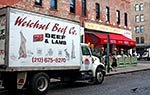
I haven't been there in years—aside from an occasional dinner as Pastis or Markt (sue me—I like frites)—mainly because of what I hear about the district, that it's become overrun with the bridge and tunnel crowd and trendoids racing to keep up with an every increasing number of dance joints. If I want to drink until I fall down, I'll do it where I'm less likely to land in a puddle of cow blood. So it's not surprising to see that Gawker has spent much of the week detailing how the neighborhood is officially ruined. In particular, Markt and Western Beef—one of the few remaining buisnesses that gave the area its name—are moving out to make way for "410 West 14th Street," a three-story retail box with all the charm and character a bunch of glass and concrete can muster.

Which brings up an interesting New York phenomenon. That is, the tendency of developers to move into hot neighborhoods and remove the thing that made them hot in the first place, while all the time believing the nabe will stay hot in the same way. Soho is full of art galleries and artists? Move in with Pottery Barns and Apple stores until all those artists are chased away to Chelsea, Williamsburg and beyond! Brooklyn has a low-key, low-slung, neighborhoody feel that's hip and cool? Get in there with as many faceless CVSs and Rite Aids as you can until it looks like outer Akron!

And so, the Meatpacking District don't pack meat no more, no more, it's dont pack meat no more. Maybe Carey buses can soon start shipping in tourists to shop. We're a three-industry town, folks: restaurants, retail, residences. We don't make anything here except money.

25 September 2006

It's Called Saturation


Oh, my God, there's still hope for a good life in New York, isn't there?

What am I talking about? Starbucks franchises are closing, that's what. A few weeks back, there was word that a branch off Washington Square shut it doors. Now there news that an outlet at 102nd and Broadway is not more. Can it be that the hydra-heading corporation has finally reached the saturation point in this old city of ours? Oh, please, please, please, please, let it continue. Let it continue, God, oh, please!

In related news, Starbucks recently closed all of its shops in Tel Aviv blaming ''operational challenges.'' So, maybe that war was good for something.

Good Idea—Now Try It Over Here

According to the fine folk at Curbed, Corcoran broker Wendy Maitland is throwing a celebrity-ridden—Julianne Moore, Matt Dillon, Marisa Tomei, Naomi Watts, Hillary Swank, Drew Barrymore, etc.—$1,000-per-plate dinner to raise money to fight poverty and AIDS in a Rwandan village.

Good idea. Now, if only Maitland would do her bit to fight poverty here in Gotham by quitting her profession and leaving town.

Egan the Destroyer


A helpful reader informs Lost City that Cardinal Egan and the Archdiocese of New York are not only trying to demolish St. Brigid in the East Village by Our Lady of Vilnius on Broome Street. The pastor of the church was informed on July 31.

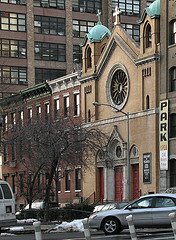
Said house of worship is a Lithuanian church that was established in 1906. It's a one story, yellow-brick affair with red doors that sits near Varick and Hudson. There used to be a Lithuanian community there, but it was dispersed when housing was torn down in 1927 to build the Holland Tunnel. (Thanks, Robert Moses.) Egan has said worshipers could go to another Lithuanian congregation in Brooklyn, but that one, it turns out, is in Maspeth, which is well known to all New Yorkers as The Neighborhood That Mass Trasportation Forgot.

The problem is similar to that at Brigid—the church needs repairs and the Church won't pony up the dough. Four winters ago, shifting temperatures caused some of the four trusses supporting the church’s roof to crack. Engineers took a look and prescribed steel cables. Otherwise, the roof would collapse. No cables were proffered. Now services and functions are held in the basement, which ain't so grand.

It sounds like a tough, colorful place. It's first pastor, Father Shistokasa, was a longshoreman who worked the docks at night and ministered by day. The current one, Father Eugene Sawicki, smokes cigars. Egan says he hasn't sold the property, but who knows how long that will be the case. Trump's building an uglirific tower down the block.

The helpful reader has started a blog to help stop the madness. The address is www.ausrosvartunyc.blogspot.com.

21 September 2006

Domino to Fall?


There's a campaign on right now to save the hulking old Domino Sugar Factory in Williamburg, which was built back in 1884, and ceased producing the sweet stuff a few years back. Unsurprisingly, some developers want to fill it to the brim with—guess what?—condos. But locals are resisting and petitioning the Landmarks Commission for help. The campaign to save it has an unlikely ally in slippery City Council Member David Yassky, who did a mighty fine job last year overturning the landmark status of another 19th century Brooklyn warehouse, 184 Kent. He also wants to save the parts of the Greenpoint Terminal Market that didn't go down in ashes in last May's huge conflgration and the McCarren pool, the huge WPA swimming hole that nobody uses for swimming anymore.

Yassky's letter said that, as Williamsburg and Greenpoint “change and evolve, it is increasingly important that we work to preserve our ties to the past." If it sounds like disingenuous politican bullshit, that's because it is. Dude's got an election coming up. And he's probably guessing that the save-Domino fight doesn't stand a chance of a sugar cube over a bunsen burner in this market. The place is a factory, after all, and factories just don't set up shop in the five boroughs anymore. If it's not carved up into luxury residences, it will sit there empty, just taunted developers with its potential land value. And developers don't like to be taunted.

Also, this is the Landmarks Commission we're talking about, those political lapdogs who'll roll over on anything if the pressure gets to be too much. Their current leadership would give up the Flatiron Building.

20 September 2006

Forgotten By Whom?


In this week's Time Out New York, with the cover story "Forgotten New York," the editors list in a sidebar a collection of past Gotham Paris Hiltons—that is, folks who were all the talk once upon a time, but whose names now draw a blank.

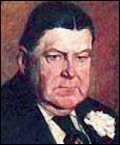
It's a peculiar selection. Journalists are often said to write the first version of history, but for historians, the TONY editors sure have short memories. Among the people whom they say have faded from public memory are actors Edwin Forrest and Laurette Taylor, tycoon and bon vivant "Diamond Jim" Brady (that's the ruddy-faced glutton at the right), disgraced quiz show contestant Charles Van Doren and scandal-ridden '80s pol Donald Manes.

Huh? Maybe I'm not your average Joe—I know too much useless history for that—but these are hardly non-entities. Any theatre fan knows Taylor and Forrest and what they were famous for. Manes and Van Doren were the subject of fairly recent movies ("City Hall" and "Quiz Show"). And any given dolt knows the name "Diamond Jim" Brady, even if they're not sure exactly why they know it.

19 September 2006

The Book Mart and the Billionaires


An article in the New York Times today about the dire straits the Gotham Book Mart has gotten into made this reader's head spin. Only in the world of New York real estate can trouble take such a byzantine form.

Let's take the simple things first. Andreas Brown, the owner of the GBM, owes $500,000 in back rent, taxes and the like. OK. Because of this, his landlords are trying to evict him. Right. Those landlords are Leonard Lauder, the billionaire of the Lauder cosmetics fortune, and Edmondo Schwartz, a real estate developer (who is not identified specifically as a billionaire, so let's play it safe and call him a millionaire).

But, wait. Lauder and Schwartz are apparently the same secret duo that snatched Brown's fat out of the fire two years ago by buying a $5.2 million townhouse at 16 E. 46th Street and letting GBM move in and lease the space a year after Brown sold the Mart's original home a block to the north. Wha? Who? These are the good souls that saved Gotham Book Mart, but now they're the guys kicking it out onto the sidewalk? What happened? Did they have a fit of humanity and are now back to their old selves?

OK, before you feel sorry for these poor bilked little moneymen and the half a mil they lack to line their pockets, consider two important words. One: billionaire. Lauper is a friggin' billionaire. That means billions of dollars. Does he really need that $500,000 thou? And Two: lease. These two save their friend and his treasured shop by buying a townhouse and THEN LEASING IT TO HIM?! Hey, jackasses—you're plutocrats! Don't show your generosity and friendship by being a nickle-and-dime landlord. Just GIVE Brown the building. He's 73, and trying to keep an irreplacable business alive.

Bet you guys dock your kids' allowance when certain chores are left undone.