03 April 2009

More About Klube’s Than You Need to Know


My favorite part of maintaining Lost City are the occasions when, while reaching out to New York’s past, New York’s past reaches out to me. After writing about their family’s long-gone businesses, I have been contacted by descendents of the founders of Krauser Hardware and Cafiero’s restaurant in Brooklyn and The Colony restaurant in Manhattan.

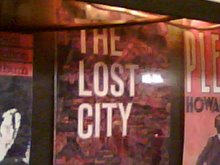
Recently, I posted something about the Grand Saloon on 23rd Street, a former brothel and speakeasy that spent a good deal of its existence (as an extant sign, above, attests) as Klube’s Restaurant. Soonafter, I received an e-mail from the great-grandchild of the Klube who founded the place! As I usually do in such situations, I pressed this person for information. After all, the information we have on Klube’s is sketchy at best.

The original Mr. Carl August Klube had worked in Germany as a waiter before he came to America and bought what would become Klube’s in 1911. In 1908, he married Agnes Klinger, who had also been born in Germany. Agnes’ brothers Henry and Joe had butcher shops on Third Avenue.

Klube’s was a restaurant and bar. It was actually originally called Klube & Klinger’s, which is, frankly, a mouthful. Since the Klube family owned it during Prohibition, it’s a pretty safe bet that they ran it as a speakeasy in the 1920s. In its day, it was known as the Little Luchow’s—a reference to the more famous German restaurant.

The family apparently did pretty well by the place. Old man Klube wore three-piece suits, a diamond stick pin and a pinky ring. His wife was an avid shopper with a driver and a personal maid. The couple had one son, Carl Henry Klube, who eventually assumed control of the place and ran it into the 1960s. Victor Borge was a regular guest. A 1950 Times account has a man named Hans Nitzsche as having been Klube’s chef for decades. The third-generation Klube worked there for a short time, but soon after it was sold.

I have also discovered some old recipes from Klube's, but I'll save them for a future day.

Bazzini's to Leave Tribeca Home


Bad news today for those clinging to the few remaining scraps of living history Tribeca has to offer. The Downtown Express reports that the age-old food-purveyor Bazzini is looking to close its shop for good. Nothing's solid right now, but owner Rocco D'Amato is fishing around for a tenant.

Bazzini's presence in Tribeca reminds us that the area used to be a huge food market, with warehouses full of nuts, fruit, eggs, cheese and whatever along every street. Bazzini stuck around by turning its former nut store and factory into a gourmet food market and cafe. Reports the Express, "The D’Amatos bought the Bazzini business and building at 339 Greenwich St. in 1983 from Teddy Bazzini, a nephew of the founder, A.L. Bazzini. Teddy told Rocco that the factory had a nuts store since the Depression. According to Bazzini’s Web site, A.L. started the wholesale business 119 years ago."

The real factory is now in Hunts Point in the Bronx and the Tribeca building was converted to (what else?) condos. I've never been a huge fan of Bazzini products (or their prices), but, jeez, if they leave, what does Tribeca have except fancy restaurants, condos and coops? A whole lot of beautiful industrial architecture without a soul.

Lost City's Guide to Boerum Hill


This is the eighth of Lost City's guides to the shards of living history and cultural potency that remain in various New York neighborhoods. The tours are published occasionally. Previous guides can be found along the right-hand navigation bar.

First off, let me say that I consider the western border of Boerum Hill to run straight down Smith Street. I know that there is some dispute about this. Some say it stretches to Court Street. But I suspect this is the work of real estate brokers who know the listing "Cobble Hill" will fetch them more money that "Boerum Hill." Furthermore, I don't know any merchant on the east side of Court who thinks they're part of Boerum Hill.

I am perfectly in accord with the other borders: State Street at the north end, Fourth Avenue to the east and Warren Street to the south. For many years, I considered the neighborhood a kind of Johnny-come-lately wannabe area, riding on the fast-gentrifying coattails of Cobble Hill and Carroll Gardens. In the last five years though, though many bike trips through its street, I've come to love the place and recognize it as having a distinct character of its own.

THE NEW ST. CLAIR RESTAURANT: This diner is as good a place as any to begin a Boerum Hill tour. Founded in 1920 at the corner of Smith and Atlantic, it's one of the oldest, consistently operating businesses in the area and has seen many waves of incomers, from Italians and Irish to Hispanic peoples to Yuppies. It's been through a few transformations in that time, the most recent being in 2008. So it doesn't look very old. But its spirit is.

THE STATE STREET HOUSES: Walk north to State Street. The block of State between Smith and Hoyt contains 23 beautifully preserved Renaissance Revival brownstones dating from the 1840s to the 1870s. The group is landmarked.

CHURCHES: Head back to Atlantic. At the north corner with Bond, there's the stark Byelorussian Autocephalic Orthodox Church, which is kind of simple and plain, but which I love because it's called the Byelorussian Autocephalic Orthodox Church. Down the block is the House of the Lord Pentecostal Church, a nice Romanesque Revival job. It used to be the Swedish Pilgrims' Evangelical Church, when there were tons of Swedes along Atlantic.


SYNAGOGUE: Look across the street at 368 Atlantic at what used to be Talmud Torah Beth Jacob Joseph. The slim 1917 structure was an antique store for a long time. Now it's something tacky called the Deity Lounge. You need an invitation to gain admittance. Eesh.

EX-LAX BUILDING: Walk down to 423-443 on the North side of Atlantic. Yes, Ex-Lax, the king of all laxatives, had its factory here. Even though the huge building was convented to co-ops in 1981, the doorway still proudly proclaims the address' former use. I wonder how it must feel to say you live in the Ex-Lax Building.

TWINS PIZZA: OK, here comes my favorite part of Boerum Hill, the remnants of what used to be "Downtown Caughnawaga." In the middle part of the 20th century, this area was settled by a large collection of Mohawk families, who had moved from a Quebec reservation in the 1920s to take jobs building New York's new skyscrapers. They were particularly adept at this task, as they were not afraid of the dizzying heights at which they had to work. Joseph Mitchell chronicled their lives in his essay "The Mohawks of High Steel." Turn a half-block north of Atlantic on Nevins to the Twins Pizza store. This address, 75 Nevins Street, used to be the Wigwam, a dark bar favored by the Mohawk workers. Over the door was the slogan "The Greatest Iron Workers in the World Pass Thru These Doors." Canadian beer could easily be had.


HANK'S SALOON: Head down Atlantic to Hank's Saloon, at Third Avenue. This rather scary-looking, low-slung dive bar has enough character on its own to merit a mention. It's of further interest, however, as another bar once popular with the Mohawks. It was called the Doray Tavern before it became Hank's, and some Indian workers lived upstairs, above the bar.


CUYLER PRESBYTERIAN CHURCH
: Walk down to Pacific Street to No. 358 between Hoyt and Bond. This former church—now a private residence with a landmarked facade—was where the Mohawks went to worship for decades. There was a yearly pow-wow, with traditional dances, prayers and smoke signals. It was built in the 1890s.


NEW YORK TIMES WAREHOUSE
: On the block of Third Avenue between Dean and Pacific is a highly ornate, neo-Classical warehouse befitting the proud nature of its former owner: the New York Times. Notice the various noble friezes at various points on the building.

THE SIDE STREETS
: As you roam around Boerum Hill, be sure to take note of the curious array of short and unusual brick structures that line Hoyt, Bond and Nevins Streets between State and Bergen. Unlike Cobble Hill, which tucked its carriage house and stables on the east-west streets, reserving the north-south veins like Clinton and Henry for grand brownstones, Boerum Hill seems to have employed its east-west thoroughfares such as Dean and Bergen for displaying the public face of its architecture. The workaday structure meant for storing stuff were put Nevins et al. Today, this makes for fun viewing as you turn corners and confront odd-job one-story and two-story structures, now converted into quaint homes.


THE BROOKLYN INN
: Be sure to make time for a beer at the Brooklyn Inn, at the corner of Hoyt and Bergen. One of the oldest watering holes in the borough, it has retained much of its 19th-century architectural details and feel, and has an invitingly anonymous atmosphere.


108 WYCKOFF STREET: An impromptu piece of urban, outdoor art. Half the three-story home is caked with a near-decades worth of tiles, sequins, mirrors and do-dads, all applied one by one by artist Susan Gardner, who lives inside. It's a delight.


ZIAD'S DELI: Head back to Smith, just north of Bergen. For me, and many others, Boerum Hill is Jonathan Letham Land, an area depicted in colorful detail in the writer's novels "Motherless Brooklyn" and "The Fortress of Solitude." Ziad's is a nothing-special deli, except that it was the basis of the deli Zeod's, which the hero of "Motherless Brooklyn" frequently visited. The Brooklyn Inn also makes an appearance in the book.

02 April 2009

Patois' "Rude Owners" Move Brooklyn Restaurant to Mulberry Street


Those rumors you heard about pioneering Smith Street eatery Patois moving from Brooklyn to Manhattan—they're not rumors anymore. It's there, at 177 Mulberry Street!

So says a big piece of paper in the window of the French restaurant's old Smith Street space, which it vacated last January. Titled "For Immediate Release," it says that "we are now open 7 days and feature the same great food and wine and are run by the same rude owners. We now have a full-bar so you can start your meal with a dirty, Ketel One martini straight up!"

Among the "bullet points" listed on a separate piece of paper are "virtually stress free parking after 7 PM" (who drives?) and "Hit Whole Foods on the way back!" (who wants to?) and "$12.95 unlimited mimosas" (uh, ick).

I'm sorry, did the owners lose their sense of taste on the trip over the East River? A dirty Ketel One martini, indeed. Good thing they beat it out of Smith Street before the Clover Club cocktail police came after them for shit like that.

b

Mystery Door Gets More Mysterious


A couple weeks back, I posted an item about a mysterious doorway in Yorkville that looked like it had been padlocked by Father Time himself sometime back in the 19th century, so rusted over were the metal gates and locks.


I took special notice of an old metal thermometer, advertising an ancient product called Nature's Remedy Vegetable Laxatives, nailed the right side of the door jamb. It seemed proof positive that the door had been locked up ages ago. (A reader informed me that Nature's Remedy later became Tums.)


I happened to be in the neighborhood of 84th and York Avenue again last night, so I took the time to give the door another looksee. And Bammo!—the thermometer is gone! You can see the outlines where it was, and the nail it hung on is still there.

I have a couple theories as to what might have happened. My post might have excited the felonious tendencies of some lusting antique collector, who snuck out under cover of night and snatched the thing. A more likely possibility, however, is the owner of the deli of which the doorway is a part—George & Sons Gourmet Deli—took the thermometer down.

Here's why I suspect the owner. Not long after a posted the item, a reader who lives in the neighborhood wrote me to say he was so intrigued, he went and inspected the doorway. I, in turn, asked him if he had queried the deli owner about the door. He said, no, he hadn't, but he was willing to. So he paid another call and asked the deli owner if he knew anything about the weird old doorway. The crazy old merchant responded by giving the poor fellow a kind of third degree, asking where he lived, if he had ID, and then saying he knew all about the door, but refused to tell. Moreover, according to the reader, the deli owner seemed surprised to learn there was a thermometer hanging there.

After seeing that the thermometer was gone, I went into the deli and asked the workers if they knew what had happened to it. They didn't seem to know what I was talking about, and if the owner was among them, he didn't speak up. I went back outside, and saw a man exiting the door that led to the apartments above the deli. He was unaware of the thermometer as well. But he said, "I know the deli doesn't have a proper exhaust system. I live upstairs and it kills me every morning. I've called the EPA but nothing happens."

Given these hints into the deliman's character, I surmise that, alerted to the presence of an old and perhaps valuable thermometer attached to his building, he took it down and is presently trying to get the best price for it on eBay. A shame.

Progress on the Wyckoff Wonder


It was back in March 2007 that I first discovered the wild and wonderful bejeweled address of 108 Wyckoff Street in Boerum Hill, which artist Susan Gardner has been slowly covering with colorful tiles and beads since 2001. I thought that, two years later, it was time to reinspect the evolving mosaic.


The facade of the building remains pretty much the same as it was two years ago (though there are more posters of Obama in the window). But considerable work has been done on the wrought-iron fence that fronts the property. Half the fence is now encrusted with a swarm of colorful and mirrored chips and shards—flowers, grapes, leaves, vines, fruit, checkboards, and other less specifiable things. And on top of many of the posts's are delightful plastic butterflies and bits of fern. Nice touch.

01 April 2009

The New F Trains Are Real!


I've heard many accounts from people who have seen them and ridden the, but tonight I finally experienced the new sleek F trains myself. I heard that smooth, female electronic R160 voice say "Next Stop: Second Avenue."

Why Bother?


OK, here you have a piece of friggin' Crapitecture as plain and flagrant as you could ask, on Third Avenue in Gowanus. Obviously, the architect made no attempt whatsoever to make the building distinctive or attractive. No lintels, no cornice, Plain-Jane windows, air-conditioners all over the place—just a boxy blight.

But then you peer inside the "lobby" (I'm being generous by using that term). And what do you find? A chandelier! I mean, what's the point? After the masterpiece in homeliness that is the apartment house, the developer thought he would class things up with this trashy trinket? To little, too late.

A Good Sign: Interborough Subway


Attached to the New York Life Building. Building that were so important they had their own private subway entrance (Bloomingdale's, the Knickerbocker Hotel, Rockefeller Center) are the coolest.

Young Sees the Light Once More


I never stepped foot in the Limelight while the Chelsea nightclub was in operation. I don't know. Drugs and dismemberment just aren't my scene. But the other day I was passing by the former church and noticed it was playing host to a sample sale that was open to the public. So I sauntered in to take a look at the interior.

Not much to see at this point, of course. But in the entranceway was a plaque from the building's holier days. "This porch," it read, "erected by his wife in loving memory commemorates the life and the service of Thomas Sears Young, a trustee of this church from 1897 to 1909. 'One day in Thy courts is better than a thousand.'"

Think old man Young, who was a director of the Equitable Life Insurance Company, was spinning in his grave all those years when club master Peter Gatien was having his way? Think Michael Alig ever gave this plaque a glance and wondered "How am I living my life?"?